The Fast Fire Watch Company is a service provider that offers fire watch coverage tailored for complex environments such as large industrial sites, high-rise buildings, and multi-use facilities. We are fast-fire watch-trained guards deployed on demand to wherever safety codes require coverage when alarms malfunction or during fire system maintenance. With transparent procedures and targeted surveillance, it seeks to minimize danger and assist building owners, property managers, and contractors.
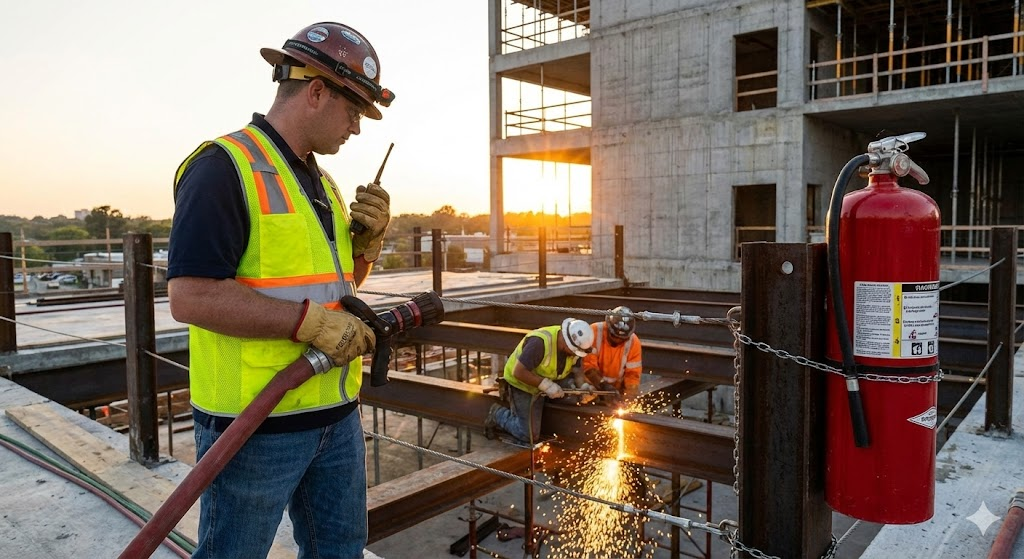
The Evolving Risk Landscape
Fire risk is evolving rapidly as facilities become larger, more connected, and more regulated. Industrial plants, data centers, logistics hubs, and mixed-use sites now contend with both physical fire risks and digital systems that can crash at the worst moments. This fuels the need for effective fire watch operations that are quicker, more exact, and capable of operating in challenging environments, highlighting the importance of professional fire watch services.
Industrial Complexity
Today’s plants typically operate hot work, high-density storage, and automated equipment on lean production schedules. One site can have welding, cutting, flammable liquids, lithium-ion batteries, and high-voltage rooms all within a few hundred meters of each other. Every field has its unique spark sources and fuel sources, thus a “one-size” fire watch strategy provides blind spots.
Effective coverage means mapping risks by zone and task. Hot work adjacent to fuel tanks requires different controls than makeshift welding next to server rooms or conveyor belts. With the increase in automated systems, sensors and robotics, new failure modes emerge, such as overheated drives or stuck actuators that can ignite dust or packaging. Old solutions, like stationary sprinklers and rotating patrols, are too slow to keep up with these changes.
Key hazards that call for focused fire watch include:
- Hot work near combustible cladding or insulation
- Temporary power lines, cables, and battery banks
- High‑bay storage of plastics, textiles, or chemicals
- Enclosed spaces with poor ventilation and heat build‑up
- Maintenance shutdowns where normal safeguards are offline
Digital tools, from AI to data analytics, now help identify patterns in near-miss reports, work orders, and equipment data. They can identify where fire watch needs to be more intense in terms of timing and location. These tools don’t substitute for human judgment on the floor. Guards still have to read the room, ask about strange odors or noises, and make snap decisions when circumstances shift.
Regulatory Pressures
Fire safety regulations are becoming more rigorous as regulators respond to intricate hazards and intensifying consumer demands. OSHA provisions and local fire codes in much of the country now specify when a fire watch service is necessary, how close fire watch personnel must remain to hot work, and how long they must stay on site after work concludes. This drives companies to demonstrate that they not only have a fire watch but also that it is educated, recorded, and dependable.
Audits and inspections are deeper than ever. Inspectors can request patrol logs, incident reports, and evidence that guards were aware of site-specific risks. Fire watch providers and facility managers are seeing more inquiries about how they monitor coverage, analyze data, and address vulnerabilities identified in previous incidents, particularly regarding their fire watch effectiveness.
A clear compliance routine is easier to sustain when it is simple and visible:
| Area | Typical Requirement | Documentation Practice |
| Hot work permits | Signed permit, defined watch radius/time | Digital or paper permits with guard sign‑off |
| System impairments | Manual fire watch during outages | Time‑stamped patrol logs and incident notes |
| Training and competence | Role‑specific instruction and refreshers | Attendance records and training summaries |
| Incident and near‑miss logs | Prompt recording and review | Centralized digital records with trend reports |
Meanwhile, the broader risk landscape now encompasses cyber threats and data breaches. Fire watch reports frequently exist in connected systems. Therefore, providers need to consider data security as well as physical safety. Robust digital hygiene minimizes the risk that sensitive floor plans, response plans, or incident histories are leaked, ensuring effective fire watch operations.
As the fire watch industry evolves, embracing technology and comprehensive fire watch protocols becomes crucial. By integrating predictive analytics and human expertise, organizations can enhance their fire watch services, ensuring a safer operational environment.
System Failures
Even well-engineered fire alarm and suppression systems require servicing, must be upgraded, or, at times, need emergency repairs. In an outage, that risk profile shifts immediately as operators lose advance warning from detectors and automated alarms. Particularly in older or heavily loaded buildings, just a few hours without alarms can be sufficient for a minor ignition to expand unobserved.
Rapid‑deployment fire watch bridges this gap. When an alarm panel goes offline, we can dispatch trained guards on short notice with clear routes, radio contact, and checklists tuned to that site. They check these higher‑risk areas more frequently, including process lines, battery rooms, server racks, and interim storage. This strategy maintains defense in depth even if static defenses are down for multiple hours or more.
Backup plans allow organizations to make decisions and act immediately. These could be pre-approved call-out procedures, designated patrol routes for various outage types, and when to deploy additional guards or increase patrol radius. By scripting the fundamentals ahead of time, facilities minimize uncertainty and maintain quick reaction times.
Fire safety practice is trending toward this fusion of planning, people and technology. AI-powered tools can notify managers when a system goes down, recommend staffing based on risk, or identify irregularities in alarm logs. The last line of safety arises from guards on the ground who feel smoke in a corner, hear an odd sound, or detect heat from a panel. The industry is moving towards hybrid models that regard human insight and digital assistance as two halves of the same safety net.
A New Fire Watch Paradigm
The fast fire watch company approaches fire watch operations as a proactive safety service, not a last-minute formality. Emphasizing effective fire watch operations, the focus is on early risk detection, intelligent technology, and talented fire watch personnel collaborating at complicated locations such as skyscrapers, hospitals, and major construction projects.
1. Predictive Assessment
The fundamental change is moving away from ‘watch and react’ to ‘study, predict and prevent’ in fire watch operations. They leverage straightforward AI-powered trend-tracking tools and historical data to identify patterns such as recurring alarm zones, hot work clusters, or overloaded circuits before they escalate into fire incidents. This proactive monitoring is crucial on hectic construction sites, where plans evolve quickly and dangers shift weekly.
In a new fire watch service mentality, guards and supervisors enter blocked exits, compromised fire doors, poor housekeeping, and temporary wiring into digital checklists. The system highlights increasing risk scores so managers can deploy additional patrols or tighten controls where needed instead of diluting resources everywhere, ensuring effective fire watch operations.
A digital log accompanies every fire watch. Time-stamped routes, photos, and comments reveal what was checked and when. A straightforward risk matrix tabulates zones by probability and consequence, so high-risk areas such as fuel storage, hot work decks, or server rooms receive increased monitoring and more rounds, enhancing overall safety readiness.
2. Integrated Technology
The quick-fire watch firm depends on simple, reliable technology instead of flashy gizmos. IoT sensors monitor heat, smoke, and in some instances, air quality, sending alerts into a single platform that monitors guard positions using GPS. A missing patrol in a high-risk area sticks out within minutes, not hours. Live maps reveal holes in coverage.
Central command staff track this live feed as well. They can call or radio guards, dispatch a back-up crew or initiate local protocols when a sensor or guard report appears dire. Interoperability is a key rule: building alarms, sprinkler panels, and reporting tools all report into a single dashboard, so there is one version of the truth during a rush. AI assists by triaging alerts, filtering out noise, and pushing the most urgent events to the front of the line.
3. Elite Personnel
Technology does not replace guards. It hones them. We dispatch trusted, certified fire watch guards who understand local fire code regulations and on-site permit requirements. On a refinery shutdown, for example, guards know hot work restrictions, gas testing schedules and emergency shut-down routes, so they can confront unsafe actions immediately.
Training doesn’t end with onboarding. Staff refresh on new code, new tools and case lessons from actual incidents. Our teams are staffed with confined space, elevated heights, or critical care specialists for high-risk work, providing customers consistent and predictable service instead of arbitrary guard change shifts.
4. Dynamic Deployment
Static post orders do not work in live, complex jobs. Fast fire watch company employs scheduling software and AI-assisted planning to move guards as risk moves, adding coverage when hot work commences on a different floor or when a fire alarm system is taken offline for tests. Short-notice events, such as a warehouse losing power, set off frenzied call-outs and route design.
Supervisors witness ground activity in real time and can tighten patrol cycles when they detect escalating risk, such as flammables stored in temporary corridors or heavy welders in a wing. It makes the operation more resilient because coverage tracks risk, not the clock.
5. Transparent Reporting
Online reporting tools supersede paper binders that can be missing, unfinished, or illegible. Each patrol, exception, and control step flows into an audit-ready log that facility managers can access and review at any time. This helps demonstrate local fire code compliance and insurance audits.
Reports can be shared with regulators in this same transparent format, eliminating uncertainty about whether a site fulfilled its fire watch responsibilities while systems were down. This visibility encourages a culture of accountability among fire watch professionals, as work is simple to audit and track.
The Tangible Business Impact
Fast, well-managed fire watch operations transform the way a site approaches risk, expense, and uptime in dense environments.
| Cost Area | Before Fire Watch (per month) | After Fire Watch (per month) |
| Emergency call-outs & overtime | €40,000 | €10,000 |
| Fire-related repairs & clean-up | €75,000 | €20,000 |
| Regulatory fines & penalties | €25,000 | €5,000 |
| Insurance premiums | €60,000 | €48,000 |
| Unplanned downtime (lost output) | €120,000 | €55,000 |
Mitigating Losses
A disciplined fire watch service saves the company real money by diagnosing issues while they are still manageable. Guards patrol high-risk areas, monitor hot work operations, and tag clogged exits or defective cables before they become an alarm. This proactive behavior significantly reduces the risk of extensive property damage and extended downtime.
In a data center or a logistics hub, a small fire incident around some cables or packaging can paralyze a wing of operations in minutes. Ongoing patrols, supported by straightforward checklists and AI-generated alerts from cameras or sensors, enable teams to shut down a line or zone in a controlled manner rather than encountering a complete facility shutdown, enhancing overall safety readiness.
Loss mitigation is not just about buildings and stock. Professional fire watch personnel assist in identifying ignition sources, directing occupants to fire exits, facilitating evacuation procedures, and maintaining communication with first responders. That layer of human expertise creates a safer environment at the workplace and reduces the risk of workers’ compensation claims or long investigations post-incident.
Real-world examples demonstrate the impact of effective fire watch operations. One industrial location with recurring minor fires around welding stations transitioned to a 24/7 fire watch model featuring GPS-tracked patrol routes. In six months, emergency responses fell to zero, insurance premiums dropped, and the client sidestepped a planned regulator fine after demonstrating hard, documented controls.
Enhancing Reputation
That presence and recorded fire watch coverage demonstrates to staff, customers, insurers, and regulators that safety is serious business. When a business can demonstrate logs, reports, and transparent response records, it is simpler to demonstrate compliance, negotiate with insurers, and pass audits without protracted disputes.
Strong fire safety habits translate into brand value over time. A contractor that can assure clients it has operated five years without a serious fire incident and substantiate that through audits from a third-party fire watch service frequently seems more solid and dependable than a less expensive competitor.
- Map fire hazards and record controls. Define zones and hazards and watch routes. Maintain maps and logs that are accessible and current.
- Maintain complete, time-stamped documentation. Capture store patrol logs, incident notes, photos, and regulator feedback in one system you can share during audits or bids.
- Share success on the inside and outside. Share clear safety indicators in employee meetings and investor updates, like “months fire-related downtime free” or “incidents intercepted at patrol level.
- Comply with regulators and insurers. Match fire watch practice to local codes and insurer recommendations. Review gaps annually with both parties.
Companies that do this tend to earn stakeholder trust and perform well in competitive tenders, particularly in industries where uptime and a culture of safety are most valued.
Streamlining Operations
- Mobile guard apps with QR / NFC checkpoints
- GPS tracking for route proof and response routing
- AI-assisted video analytics detect smoke, heat, or abnormal motion.
- Real‑time dashboards for control rooms and managers
- Digital incident forms with photo and video upload
Digital tools enhance fire watch operations by making deployment faster and more accurate. Schedulers can see who’s on site, which areas need cover, and where gaps will appear, enabling them to move fire watch personnel in minutes instead of relying on long phone chains. AI assistance sorts camera feeds, allowing operators to focus on significant warnings rather than sifting through numerous monitors.
Real-time dashboards significantly increase situational awareness at all sites. For instance, a regional manager can check the status of several plants simultaneously, track open incidents, and ensure that every patrol route is completed on schedule. This consistency is crucial for maintaining effective fire watch services through shift changes or busy periods.
Standardized fire watch protocols bring everything together. When each guard follows the same hot work, high-risk storage, and after-hours coverage steps, it simplifies onboarding new staff and demonstrates compliance, ultimately maintaining business continuity with less disruption and fewer costly emergency call-outs.
Conclusion
Fire risk shifts fast now, and old habits frequently come up short. Fast Fire Watch Company fills that void with transparent tools, trained guards, and intelligent application of technology. A mall with a broken alarm, a plant with hot work, or a high rise under remodel are all confronting real fire risk right now. Powerful fire watch coverage reduces damage, minimizes downtime, and keeps crews cool in a tough situation.
To help you get a feel for how well it fits, walk through one site in your mind. Imagine night work, reduced manpower, and one critical system down. If that scene sounds familiar, contact us for an easy fire watch plan to fit your risk.
Frequently Asked Questions
What makes The Fast Fire Watch Company different from traditional fire watch services?
The Fast Fire Watch Company offers professional fire watch services, delivering fast, effective, and affordable fire watch coverage in complex environments. They focus on mitigating blind spots and enhancing response fire watch services to ensure compliance in industrial sites, high-rises, and sprawling commercial facilities.
How does The Fast Fire Watch Company handle complex environments?
They evaluate site-specific risks, access to the site, and critical systems while ensuring effective fire watch operations. By creating custom patrol routes, monitoring schedules, and reporting pipelines, this customized support enables consistent fire watch coverage in facilities with multiple buildings or elevated fire risks.
Can The Fast Fire Watch Company support compliance with fire codes and regulations?
Yes. The service matches local fire codes and safety standards, ensuring effective fire watch operations. Their experts record rounds, events, and remediation, which assists companies in demonstrating compliance during inspections and audits, minimizing regulatory risk.
Does The Fast Fire Watch Company use technology beyond human patrols?
Yes. They pair on-site fire watch personnel with digital reporting, real-time communication, and incident tracking tools, enhancing fire watch operations, facilitating quicker decision-making, and fortifying overall fire safety management.
How quickly can The Fast Fire Watch Company deploy fire watch coverage?
A fast fire watch company offers a unique approach to fire watch operations in complicated spaces, ensuring effective fire watch services. They can deploy experienced fire watch personnel at a moment’s notice, especially after system outages or emergency situations, with response times varying by location and site requirements.
How can using The Fast Fire Watch Company reduce business risk and cost?
Comprehensive fire watch services ensure effective fire watch operations to prevent incidents and minimize downtime and fines. Transparent record keeping and proactive monitoring reduce the risk of expensive claims and damage, aiding business continuity and insurance needs.
Is The Fast Fire Watch Company suitable for temporary and long-term fire watch needs?
Yes. It can assist with short-term coverage in the event of system outages, renovations, and hot work operations. Additionally, it can provide effective fire watch services in high-risk work environments or locations with prolonged fire protection restrictions, evolving with them as situations shift.